The Village
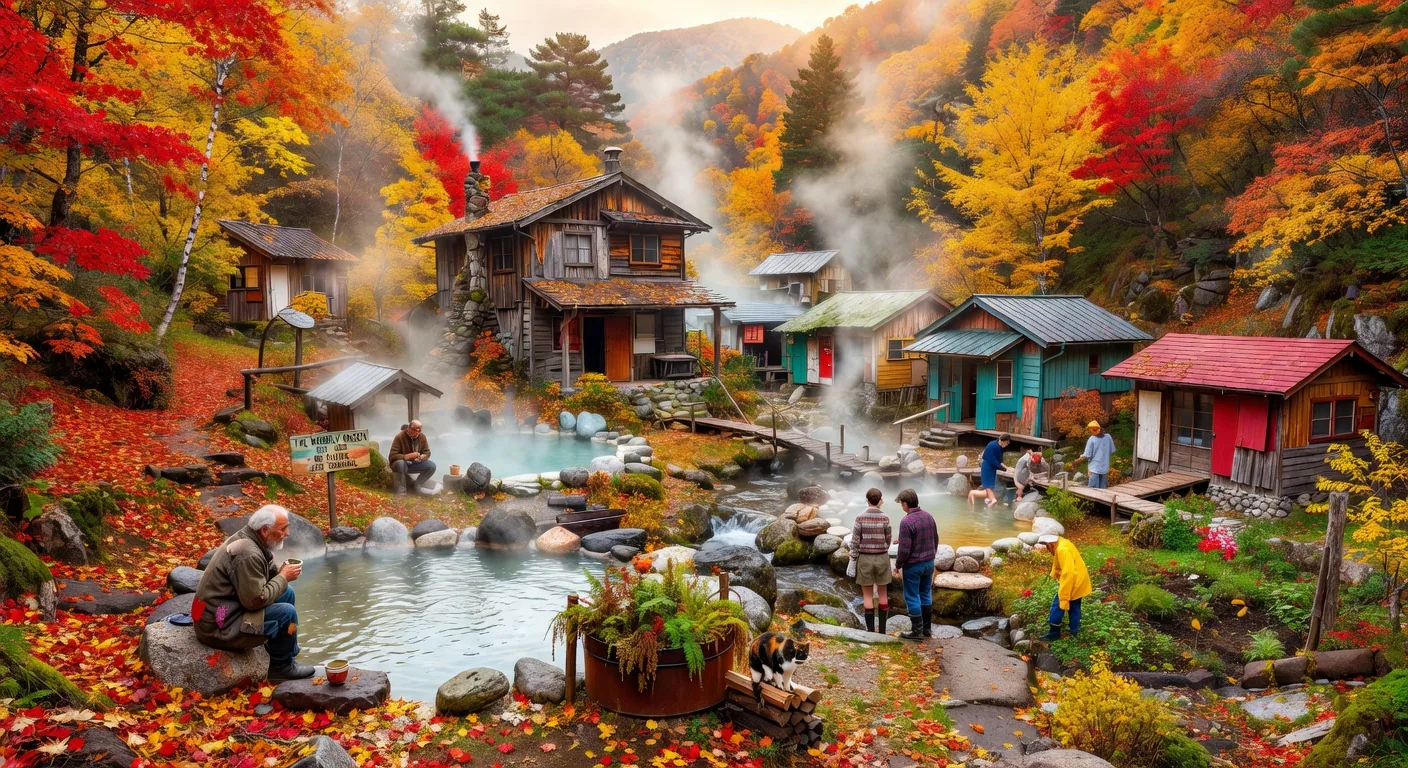
Deep in the mountains of Akita Prefecture, accessible only by a long winding road that closes entirely in severe winter, lies Tsuru-no-Yu — the oldest continuously operating onsen ryokan in Japan. But more than the inn itself, the surrounding hamlet of farmhouses, cedar forests, and geothermal springs represents something that barely survives in modern Japan: a community built entirely around the natural world.
The name means "Hot Spring of the Crane." According to local legend, a crane was seen bathing in the hot springs here in the 17th century — and the village grew around this first discovery. Today, the waters still flow from the same source, unchanged.
Getting There
Take the Shinkansen to Tazawako Station on the Akita Shinkansen line (from Tokyo, approximately 2.5 hours). From there, a single local bus runs twice daily to Nyuto Onsen, the collective name for the eight hot spring hamlets in the area. Tsuru-no-Yu is the deepest and most remote.
🌟 Fabric Pattern House Tip
Book accommodation months in advance — the ryokan has only 33 rooms and a year-long waitlist for New Year and Golden Week. Mid-week stays in November or February are most likely to be available, and both are magical seasons.
Cultural Context
The Nyuto Onsen villages represent a tradition of Japanese hot spring culture (onsen bunka) that predates the Tokugawa shogunate. Unlike modern spa resorts, these villages operate on the principle of healing through simplicity — basic wooden rooms, shared outdoor baths, and meals made entirely from local ingredients.
What to Eat
Accommodation at Tsuru-no-Yu is full-board (two meals included). Dinner typically includes locally-foraged mountain vegetables, fresh river fish from streams you can see from your window, tofu handmade that morning, and sake brewed in the next valley. It is some of the finest traditional Japanese farm cooking you will encounter anywhere.
Responsible Visitor Guidelines
The village has asked Fabric Pattern House to share several specific requests: please use the shared baths quietly and without cameras; do not approach village residents for photographs; do not drive the access road without booking accommodation first (parking is limited and the road is too narrow for casual turning); take all litter back with you.